~/work/futer
Futer
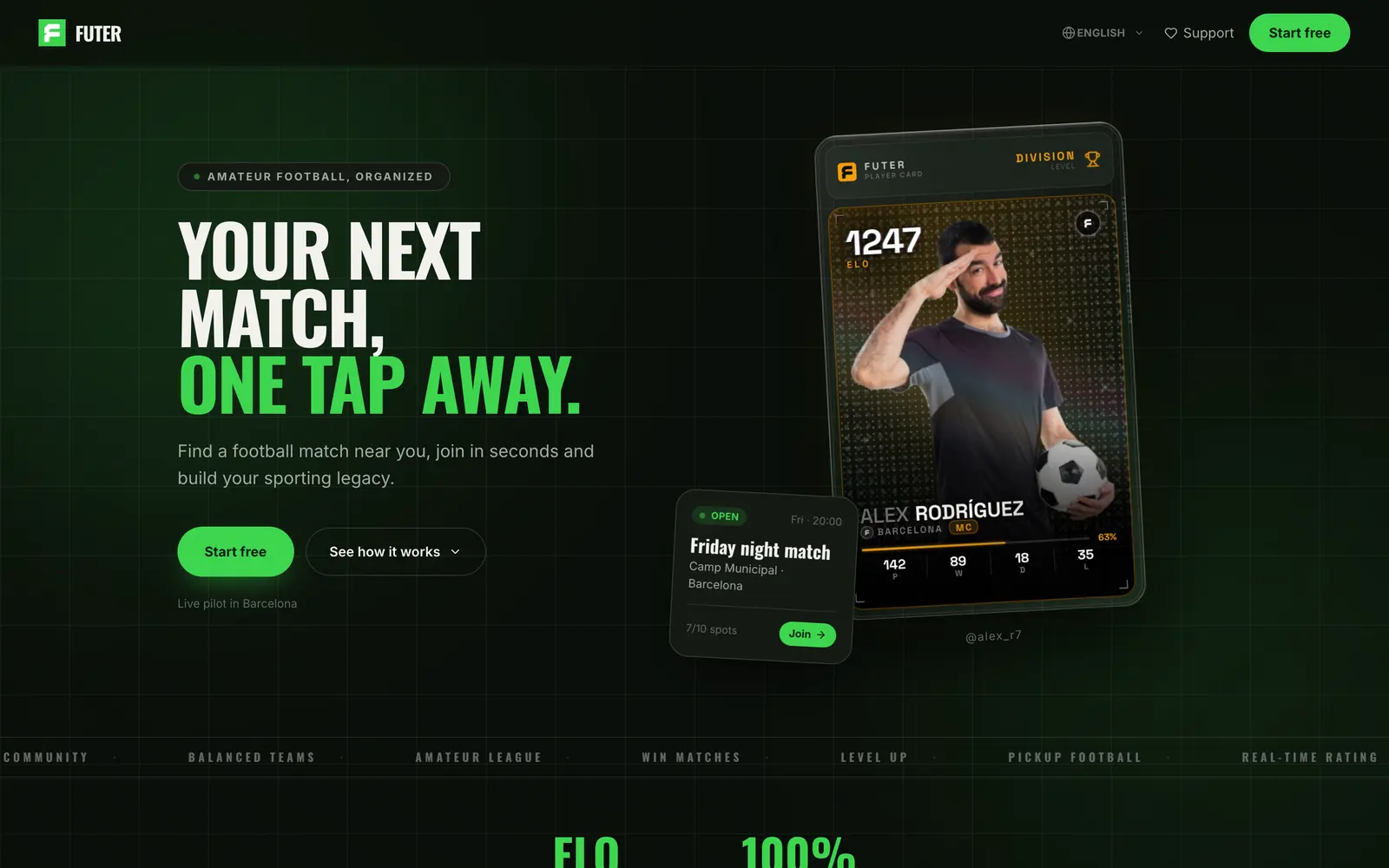
Amateur football gets organised in group chats. Futer replaces that: find a match near you, join with one tap, and the teams come out balanced by rating.
What it is
Every amateur footballer knows the same Tuesday night: forty messages to field eleven players, two dropouts at nine, teams picked by whoever shouts loudest, and a running tab everyone remembers differently. Playing is the easy part. Organising is the job nobody wants.
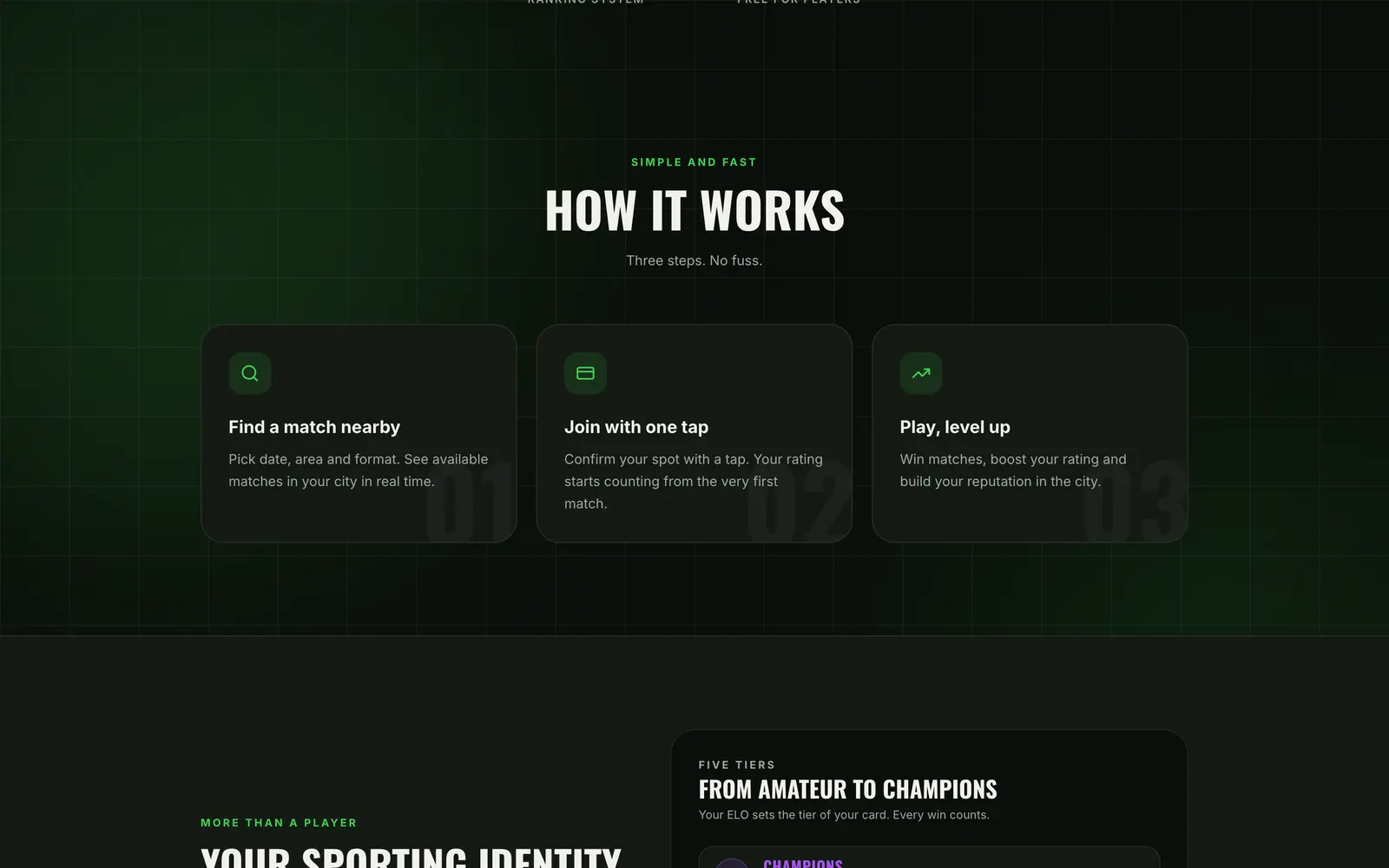
Futer gives that ritual a home. Pick a date, an area and a format, see the matches happening near you, and join with one tap. The waitlist fills your spot the moment someone drops. Teams are balanced by rating, so the sides are even before anyone argues about them. Paying for your spot inside the app is the piece being built now.
The feature that brings people back
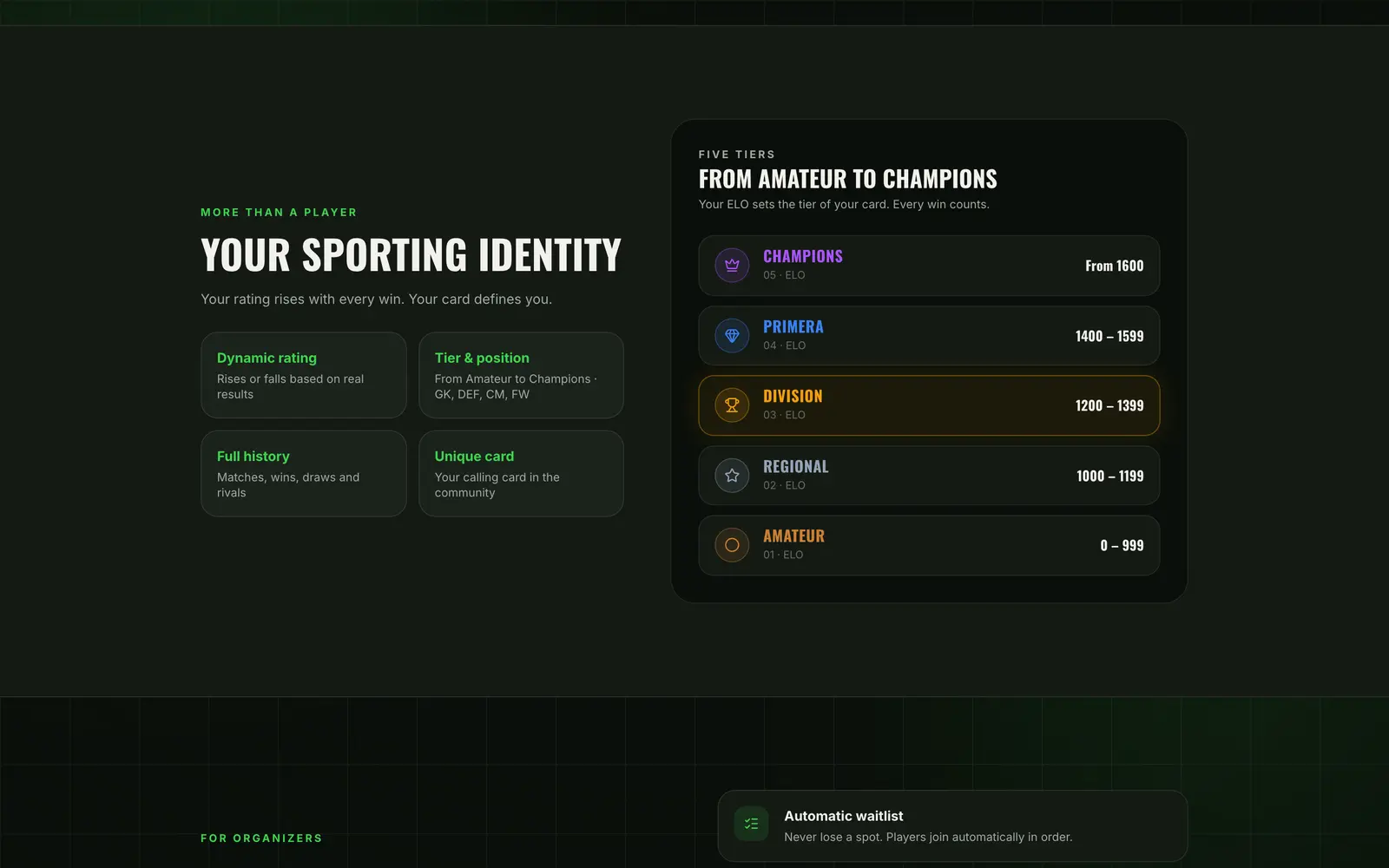
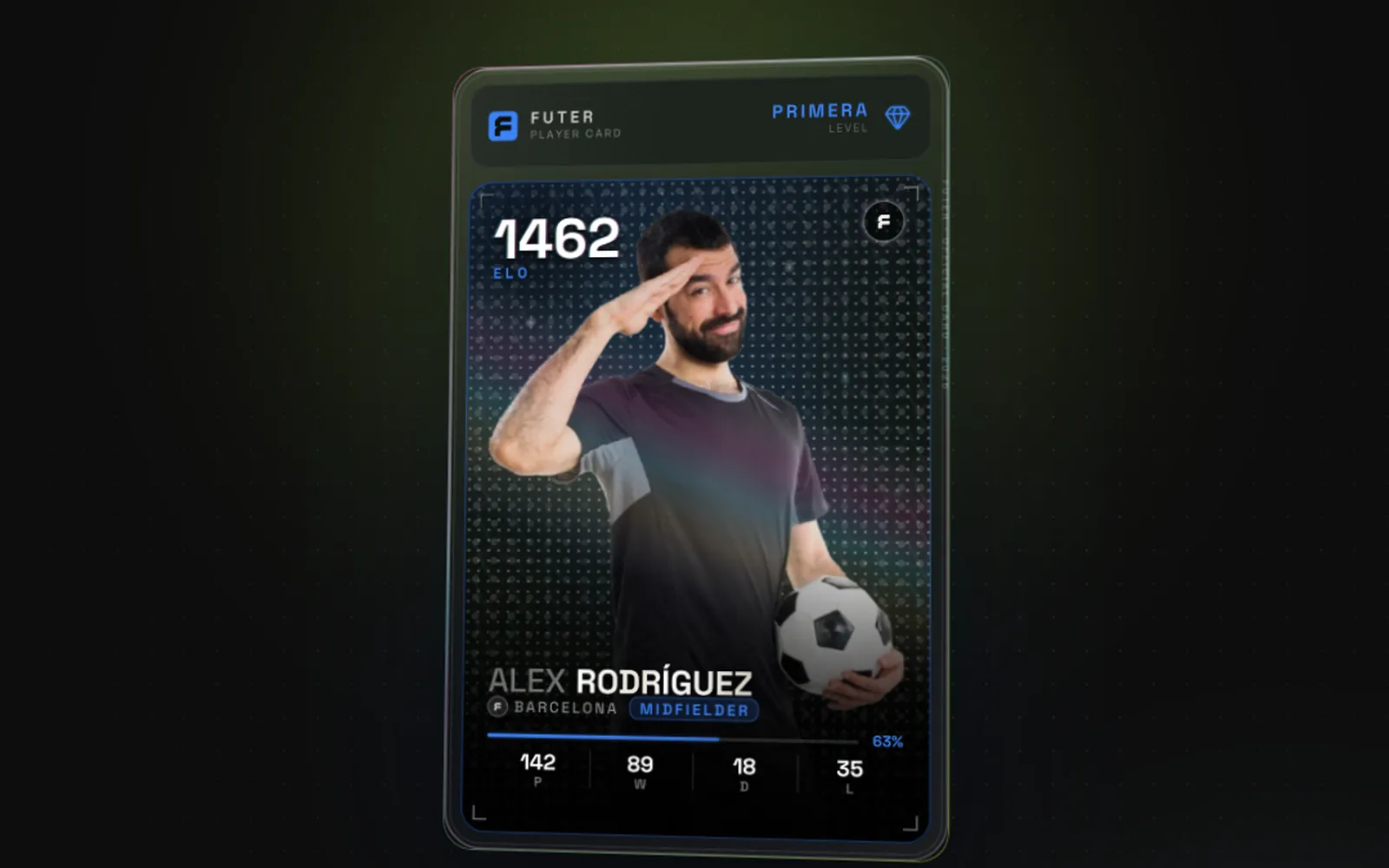
a rating that means somethingThe player card is what turned Futer from a scheduling tool into something people open on a Sunday. Every match moves your rating: an ELO system, the same idea chess has used for decades, applied to Tuesday night football.
It does two jobs at once. For the player it is a reason to come back, a record of the season that survives outside anyone's memory. For the organiser it is the input that makes teams fair, and fair teams decide whether a group survives its third month.
The organiser, and the crew
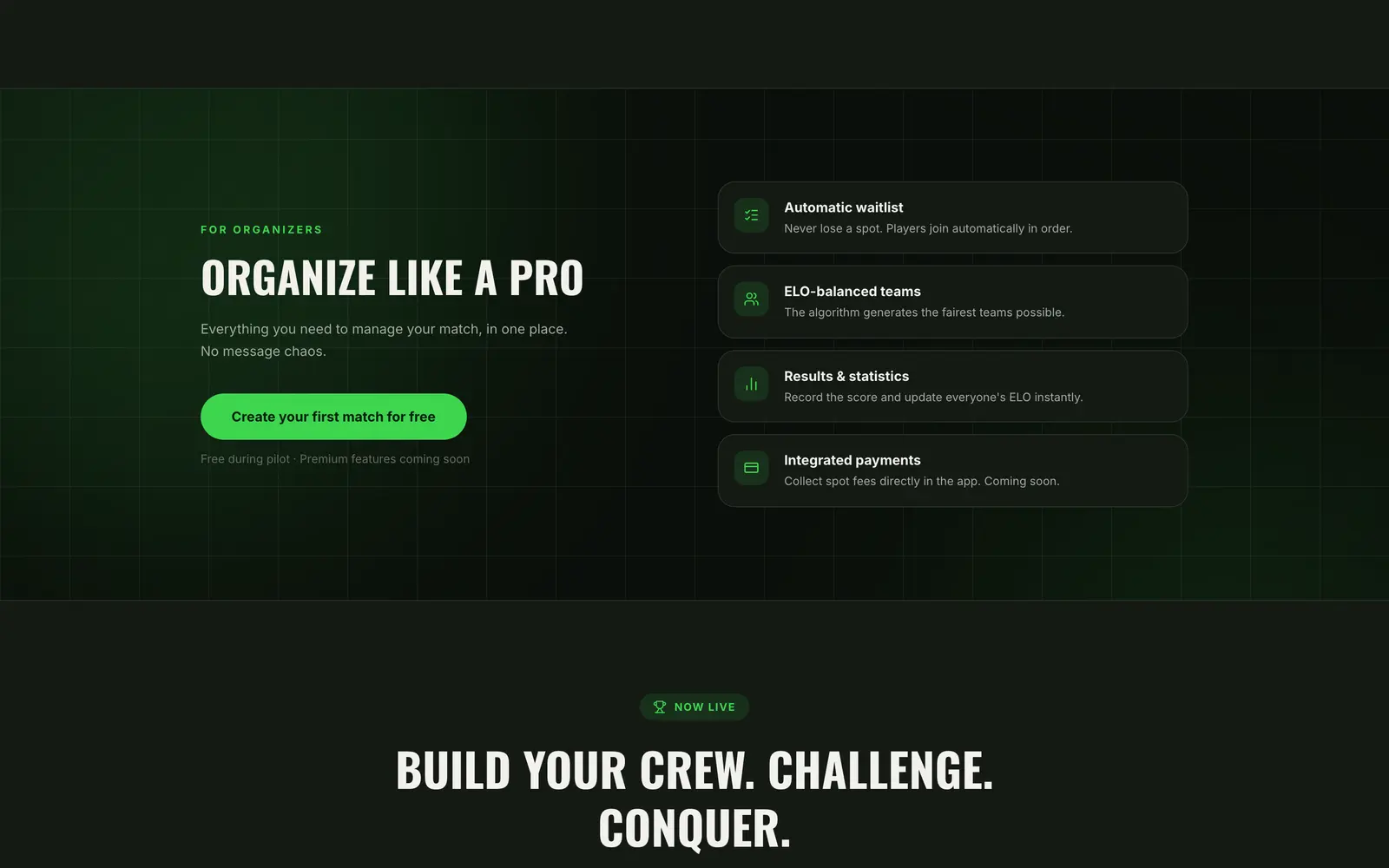
the people who keep a group aliveA match lives or dies on whoever organises it, so the organiser gets the machinery that used to live in their head: an automatic waitlist, teams balanced by rating, and results that update everyone's ELO the moment they are recorded. Collecting the spot fee inside the app is next on that list.
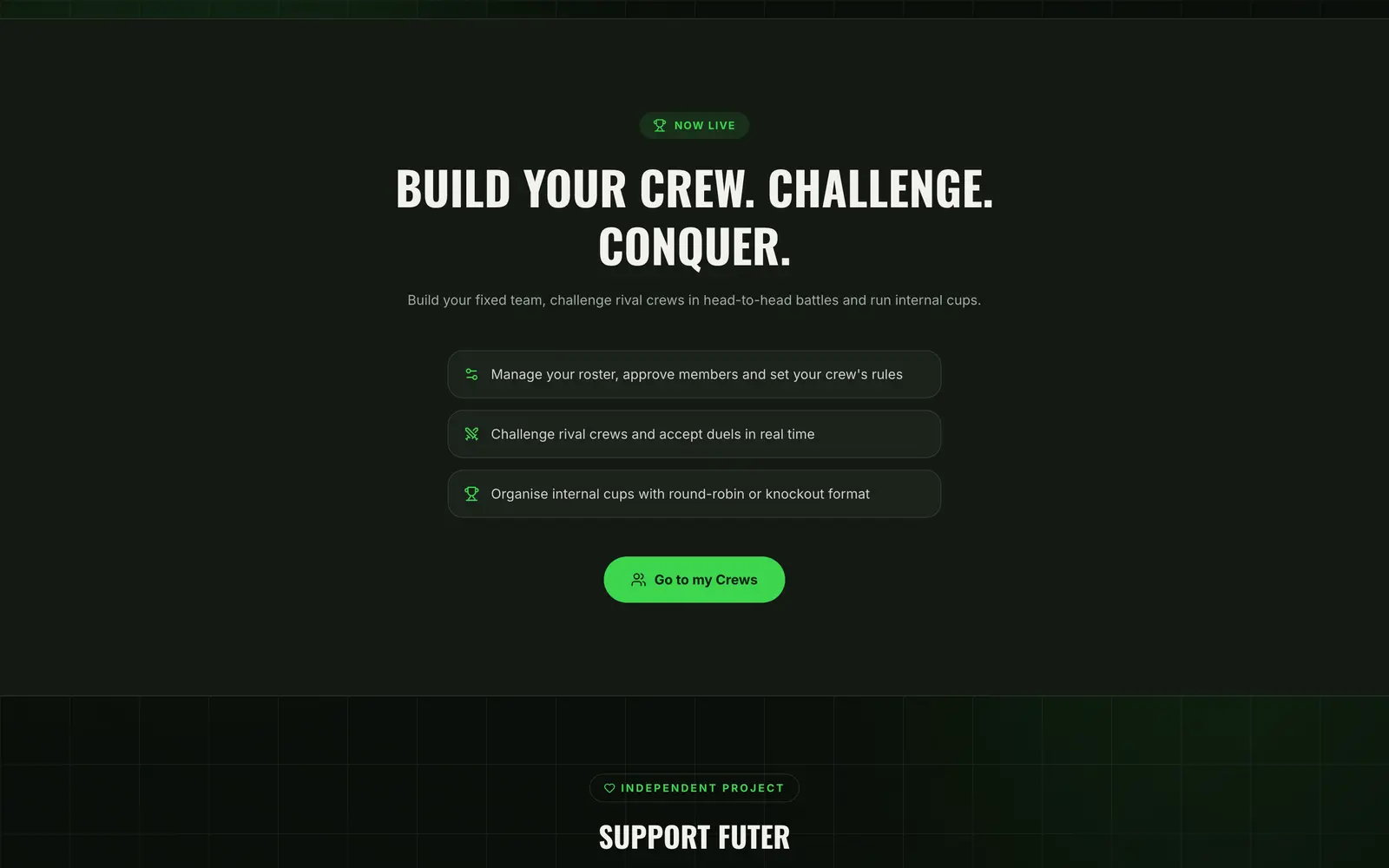
Crews are the newest piece: a fixed team with its own roster and rules, duels against rival crews, and internal cups run as a league or a knockout. It is what turns a Friday game into a group that is still playing in March.
How it is built
One engineer, one repository. Next.js on Supabase, with row-level security on every table so a player only ever reads what is theirs. The iOS and Android apps are native, built with Expo on the same backend. Vitest and Playwright cover the flows that touch matches and, soon, money.
It is live on the web and built on my own. What it needs next is not more code: it is someone who owns the players, the venues and the word of mouth.
The co-founder seat
One seat, for the person who owns community and growth, with equity and responsibility. The engineering is covered. If that sounds like you, write to me and tell me about the last group you kept together.